Home >> News >> Industry News
Developing new energy is embracing the future |
作者:本站 发布时间:2026-05-21 浏览:6次 |
At the World Economic Forum Annual Meeting 2026, the topics of green economy and new energy sparked heated discussions. Among them, a report titled "The CEO's Guide to Green Economic Growth" proposed that the global green economy has grown into a huge market worth $5 trillion, becoming the fastest-growing sector after the technology industry. China's new energy production capacity and market share rank first globally, making it a core force leading the world's green transformation. However, there are also dissenting voices amidst the heated discussions. Some countries regard China's advancements as a "threat", maliciously belittle and slander new energy, and advocate for the extraction and use of more oil and gas resources. In the face of the global trend, rejecting and obstructing green transformation is akin to using the key of the old era to open the door of the new era, and ultimately will only lead to failure. 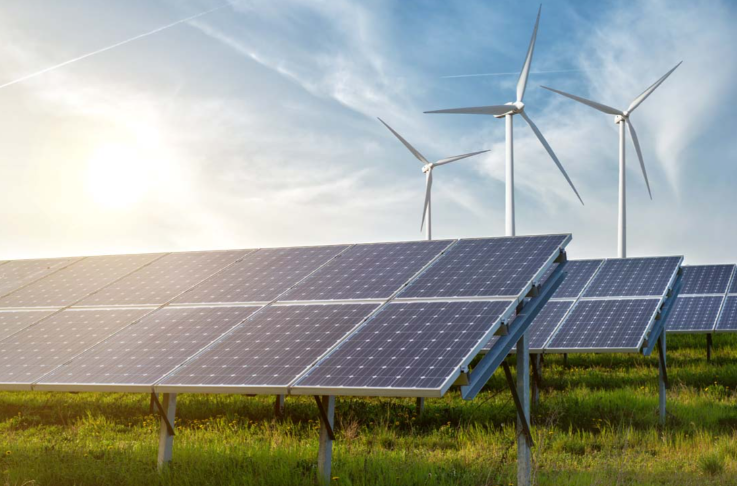
Why, in the face of complex global economic patterns and climate challenges, should we embrace new energy with even greater determination? Actions speak louder than words. From the perspective of new energy products themselves, the development of new energy in China has helped solve energy access issues in many countries. Currently, China has carried out green energy project cooperation with hundreds of countries and regions. Clean, safe, and high-quality green energy projects and new energy products have effectively solved issues such as difficulties in accessing electricity and high electricity prices in relevant countries and regions. With the continuous development of large-capacity wind turbines, photovoltaic crystalline silicon cells, perovskite cells, etc., China is promoting a further reduction in the cost of new energy. The virtuous cycle brought about by Chinese manufacturing has made new energy the most economical choice in most regions around the world. Currently, two-thirds of global energy investment is flowing to clean energy, primarily new energy. This trend will not reverse. The development of new energy in China has created a significant emission reduction effect globally. During the "14th Five-Year Plan" period, China's exports of wind power and photovoltaic products have cumulatively reduced carbon emissions by approximately 4.1 billion tons for other countries. It is estimated that China's contribution to carbon emission reduction in global renewable energy power generation exceeds 40%. The development of new energy in China is leading the global adjustment of energy structure and promoting the achievement of sustainable development goals. In the historical process of addressing climate change, making good use of new energy is a key option. The development of new energy in China has become a new engine for global economic growth. When traditional economic growth engines falter and trade protectionism rises, green transformation stands as one of the few areas that can forge global consensus and create significant new growth. China offers not just goods, but also the possibility of growth itself. A new energy vehicle factory can drive hundreds of upstream and downstream enterprises, ranging from high-end steel products and smart chips to vehicle networking services. The construction of a photovoltaic power station can revitalize local building materials, logistics, and operation and maintenance services. Behind this, a wealth of employment and business innovation has been created. From a higher-dimensional perspective, new energy is not just an ordinary commodity, but also capable of bringing about a leap in human civilization. At the World Economic Forum Annual Meeting 2026, in response to some international misunderstandings about China's new energy industry, Zhang Lei, Chairman of Envision Technology Group, stated that China's new energy is a "civilization-level export" and essentially an advanced productive tool for building a new energy infrastructure for the world. This viewpoint has gained widespread recognition. Energy transformation is far more than a simple substitution of energy types; it is essentially the underlying driving force behind the development of human civilization. Historically, every leap in human civilization has been almost synchronized with fundamental changes in energy utilization methods. In the era of firewood, it propelled humanity into a settled agricultural civilization, enabling slash-and-burn cultivation. In the coal era, it gave rise to the first industrial revolution, where machines replaced manual labor, marking the transition of human society into industrial civilization. In the era of oil and electricity, it spurred the second industrial revolution, pushing industrial civilization to a highly developed stage. The current new round of energy transformation, with new energy as the mainstay, will propel human civilization towards a higher stage. Historical energy transformations primarily pursued more efficient and powerful energy; this round of transformation places greater emphasis on the sustainability of development, addressing the dilemma of limited resources and climate change, and achieving synergy between economic development and green transformation. Moreover, this round of transformation is a systematic, digital revolution, relying on multiple technological clusters such as renewable energy, new energy storage, and smart grids, and deeply integrating big data and artificial intelligence. Its impact will be far more profound and extensive than previous transformations. This round of energy transformation will fundamentally reshape the global economic structure and productivity. By reducing marginal energy costs, implementing digital and networked configurations, and incorporating ecological values into the economic system, it will drive innovative allocation of production factors, giving birth to new industries, new models, and new drivers. For instance, cultivating industries such as photovoltaics, wind power, energy storage, hydrogen energy, and new energy vehicles, guiding high-energy-load industries to relocate to regions rich in renewable energy, and optimizing the layout of productive forces; thanks to the new energy system, countries can better develop high value-added manufacturing, build artificial intelligence training systems, and other future-oriented industries. The answers to history are often written by those who take action. By promoting green and low-carbon development practices, China is transforming its ecological advantages into developmental advantages, proving that green transformation is not a burden but an important springboard for high-quality development. Embracing new energy means embracing a more resilient economy, a more sustainable civilization, and a more promising future. |