Home >> News >> Industry News
In-depth information on the development status, supply and demand pattern, and industrial upgrading trends of the domestic petroleum machinery industr |
作者:本站 发布时间:2026-05-21 浏览:4次 |
As we enter 2026, the global energy structure transformation is steadily advancing, and domestic market demands for oil and gas exploration and development, oilfield engineering services, and energy equipment renewal and transformation continue to be unleashed, creating a relatively stable development environment for the petroleum machinery industry. As a core supporting sector in the midstream of the energy industry chain, petroleum machinery encompasses multiple sub-categories such as oil and gas drilling equipment, oil extraction equipment, gathering and transportation equipment, specialized oilfield tools, and energy-saving and environmental protection supporting equipment, widely serving diverse scenarios such as onshore oil and gas fields, offshore oil and gas development, unconventional resource extraction of shale oil and gas, and the transformation and upgrading of old oilfields. Under the combined effects of multiple factors such as ensuring energy supply and stabilizing prices, the green and low-carbon transformation of industries, and the localization substitution of high-end equipment, the domestic petroleum machinery industry as a whole is showing a development trend characterized by optimized supply and demand structure, accelerated technological research and development, deepened industrial chain collaboration, and steadily expanding overseas market layout. The overall operational resilience of the industry is gradually becoming more prominent.
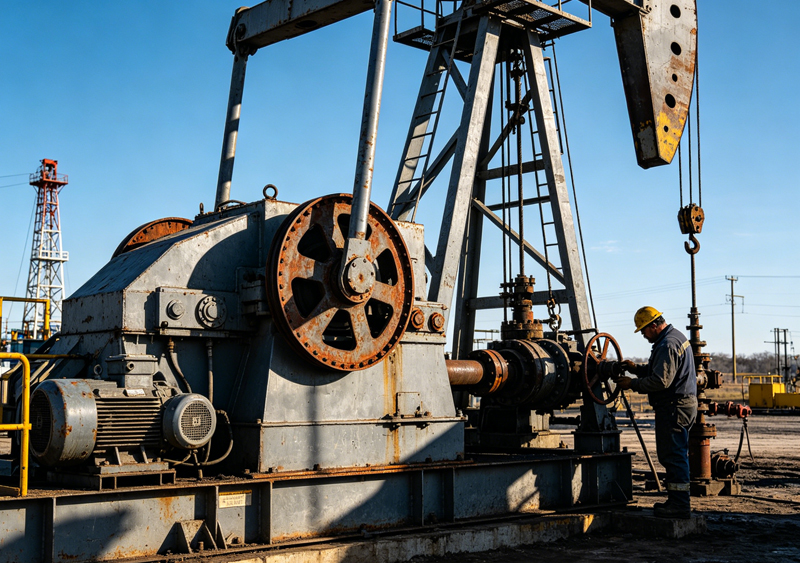
From the perspective of the overall macro environment of the industry, the domestic energy security strategy continues to be implemented, and the investment in exploration and development of oil and gas resources remains at a reasonable scale, providing basic support for the demand of the petroleum machinery market. In recent years, China has continuously intensified the exploration of unconventional energy resources such as deep onshore oil and gas, offshore oil and gas, and shale oil and gas. Old oil fields have also gradually entered the cycle of production increase, transformation, and equipment iteration and renewal, indirectly driving the market rotation demand for products such as drilling machinery, workover equipment, and oil extraction supporting devices. At the same time, under the background of the dual carbon goals, the oil and gas industry is accelerating its transformation towards green mining and low-carbon operation and maintenance. The market space for sub-categories such as oilfield energy-saving equipment, oil and gas wastewater treatment equipment, and intelligent emission reduction supporting machinery is gradually opening up, becoming an important component driving industry growth.
The adjustment of global energy trade patterns and changes in international cooperation models for oil and gas projects have also indirectly impacted the domestic petroleum machinery industry. Several resource-rich countries overseas continue to promote local oil and gas development projects, maintaining a stable demand for mid-range petroleum machinery products that offer moderate cost-effectiveness, strong adaptability, and a comprehensive operation and maintenance system. This has created external conditions for domestic manufacturing enterprises to expand overseas. Meanwhile, international exchanges in high-end equipment technology and the circulation of parts supply chains have become more normalized. The industry now possesses better external collaborative conditions in terms of technology learning, parts matching, process upgrading, and other aspects, which contribute to the steady improvement of overall manufacturing levels.
On the supply side, the development pattern of the domestic petroleum machinery industry cluster has basically taken shape. Relying on the industrial manufacturing foundation and supporting advantages of the industrial chain, regions such as Shandong, Hebei, Jiangsu, Sichuan, and Shaanxi have gathered a large number of enterprises engaged in complete machine manufacturing, parts processing, and oilfield supporting services, forming a complete industrial system from raw material supply, precision casting, mechanical processing, complete machine assembly to after-sales operation and maintenance. The improvement of the industrial cluster has effectively reduced the logistics costs of parts supporting, improved the efficiency of product production and delivery, and provided supporting support for the specialized development of small and medium-sized enterprises.
The industry's production capacity structure is undergoing a moderate adjustment process. The market supply of traditional general-purpose petroleum machinery products is relatively abundant, and market competition is increasingly focused on dimensions such as product process stability, delivery cycle, post-operation and maintenance services, and customization and adaptability. However, for high-tech categories such as high-end deep-well drilling equipment, offshore platform-specific machinery, intelligent digital oil extraction equipment, and corrosion-resistant high-pressure gathering and transportation equipment, there is still room for improvement in effective market supply at this stage. Some high-end niche areas still rely on technological research and development accumulation and process breakthroughs to fill market gaps.
With the continuous improvement of environmental protection regulations, safety production standards, and industrial manufacturing norms, inefficient and outdated production capacities in the industry are gradually entering a natural phase-out cycle. Small and medium-sized workshop-style processing enterprises are constrained by factors such as environmental protection investment, technological upgrading, and qualification standards, resulting in a narrowed living space. Industry resources are gradually shifting towards leading and core enterprises that possess large-scale production capabilities, comprehensive quality inspection systems, compliant business qualifications, and sustained R&D investment. Most large-scale enterprises have begun to abandon extensive production models, gradually increasing investment in intelligent transformation of production lines, updating precision processing equipment, and standardizing production process control. While improving product yield, they are also adapting to the increasingly stringent quality standards and environmental protection requirements of the industry.
The demand-side market exhibits dual characteristics: a solid traditional basic demand and an expanding emerging segmented demand. Traditional onshore conventional oil and gas fields remain the core application scenario for petroleum machinery. Basic equipment such as drilling rigs, pumping units, wellhead devices, pipeline valves, and workover tools maintain a stable rigid demand along with the normalized exploration and development of oil and gas. The implementation of domestic infrastructure energy supporting projects and local energy reserve projects has also indirectly driven the release of orders for small and medium-sized petroleum machinery supporting products, providing a continuous support to the industry's basic market.
Unconventional oil and gas development has become an important growth point for industry demand. The large-scale extraction of resources such as shale oil, shale gas, and tight oil and gas has raised higher requirements for specialized drilling tools, horizontal well supporting equipment, complete fracturing equipment, and high-temperature and corrosion-resistant downhole materials, forcing industry enterprises to optimize their product mix and develop specialized mechanical products tailored to unconventional extraction scenarios. The offshore oil and gas development sector is steadily advancing, with market demand for sub-categories such as offshore platform supporting machinery, underwater extraction equipment, and specialized equipment for corrosion resistance and wind and wave resistance increasing year by year, becoming a key direction for many enterprises to focus on.
The wave of digitalization and intelligent transformation is deeply penetrating the field of petroleum machinery. The construction of smart oil fields is accelerating, and products such as intelligent pumping equipment, remote monitoring drilling devices, automated gathering and transportation control systems, and oilfield Internet of Things (IoT) supporting machinery are gradually being promoted and applied in major oil and gas fields. These intelligent equipment, which integrate sensing technology, automatic control, and data acquisition and analysis, can help oil fields reduce manual operation and maintenance costs, improve extraction efficiency, and reduce energy loss. More and more oil and gas extraction enterprises are willing to increase the proportion of replacement and procurement of intelligent equipment, opening up new market space for the intelligent upgrading of the petroleum machinery industry.
At the level of technological research and industrial innovation, the integration of production, education, and research in the domestic petroleum machinery industry continues to accelerate. Universities, research institutes, industry technology research and development institutions, and production enterprises have established a normalized cooperation mechanism, jointly tackling challenges in areas such as high-end material application, equipment structure optimization, corrosion and wear resistance process upgrading, intelligent control system development, and energy conservation and emission reduction technology implementation. In fields like high-strength alloy materials, special welding processes, precision heat treatment, and lightweight equipment design, multiple research and development achievements have gradually been industrialized, steadily enhancing the service life, operational adaptability, and stability of domestic petroleum machinery products.
Meanwhile, the industry's emphasis on product customization and scenario-specific adaptability continues to increase. Given the significant differences in geological conditions, climatic environments, and extraction depths of oil and gas fields across different regions, general-purpose equipment has become difficult to meet personalized operational needs. Customized design, on-demand adaptability and modification, and exclusive working condition-specific research and development have become important ways for enterprises to enhance their market competitiveness. By deeply exploring and segmenting scenarios, enterprises develop specialized models for special operating environments such as deep wells, high altitudes, high corrosion, deserts, and Gobi, gradually forming differentiated competitive advantages.
In terms of overseas market layout, domestic petroleum machinery exports have maintained a stable operational trend. Leveraging a complete industrial chain, moderate product cost-effectiveness, and flexible customized service capabilities, domestic petroleum machinery has gradually gained recognition in markets such as Southeast Asia, Central Asia, the Middle East, and Africa. Most enterprises with export qualifications are no longer limited to the export of simple products, but have begun to gradually improve overseas after-sales operation and maintenance networks, as well as local parts supply systems. They are securing overseas market share through long-term project cooperation, technical service exports, and other means. At the same time, enterprises are also actively optimizing their overseas market layout, diversifying the impact of fluctuations in single regional markets, and enhancing global resource allocation and market risk resistance capabilities.
From the perspective of raw materials and costs, the prices of core raw materials such as steel, special alloys, hydraulic components, precision bearings, and electronic control parts exhibit range fluctuations, exerting a phased impact on the production costs of petroleum machinery enterprises. Enterprises mitigate the operational pressure brought about by fluctuations in raw material prices by optimizing raw material procurement channels, establishing long-term strategic cooperation pricing mechanisms, improving production processes to reduce material wastage, and promoting the localization of parts substitution. Simultaneously, reasonable control over logistics and transportation, labor costs, and environmental protection and maintenance costs has also become a crucial lever for enterprises to maintain profitability.
The recycling and remanufacturing of waste equipment has gradually become an emerging development direction in the industry. Large-scale equipment in the petroleum machinery sector is relatively expensive and has a long service life cycle. After professional dismantling, component inspection, precision repair, and performance upgrading, old equipment can be re-adapted to meet the operational needs of small and medium-sized oil fields and remote areas. Equipment remanufacturing not only reduces the procurement costs of oil and gas enterprises but also aligns with the industrial development concept of circular economy, energy conservation, and environmental protection. Currently, the industry's remanufacturing processes are gradually maturing, and the number of market participants continues to increase. In the future, it is expected to become a new business growth point in the industry.
At the policy level, relevant departments have continuously introduced guiding policies supporting the development of high-end equipment manufacturing, localization of energy equipment, and green and low-carbon industries. These policies encourage the petroleum machinery industry to intensify research and development of high-end technologies, upgrade intelligent equipment, and promote energy-saving products. At the same time, strict regulations are imposed on industry production environmental standards, product quality testing standards, and safety production and operation requirements. Under the guidance of these policies, the industry is steadily transitioning towards high-end, intelligent, green, and standardized development. The extensive expansion of production capacity, which is low in added value, high in energy consumption, and high in pollution, is gradually being restricted. The industry is now placing greater emphasis on quality improvement and sustainability.
Looking ahead to the subsequent and medium- to long-term development trends in 2026, in the short term, domestic investment in oil and gas exploration and development will remain stable. The traditional rigid demand market for petroleum machinery will provide solid support, and the overall production and sales operation of the industry will maintain a steady pace. There will be no significant fluctuations in market prices and business operating conditions. From a medium- to long-term perspective, the transformation of the energy structure, the expansion of unconventional oil and gas development, the implementation of smart oil fields, and the continuous advancement of offshore oil and gas projects will continue to drive the growth in demand for high-end intelligent petroleum machinery, specialized working condition equipment, and energy-saving and environmental protection supporting equipment.
The industry's production capacity structure will undergo further optimization, with technological research and development capabilities, product scenario adaptability, intelligent manufacturing standards, and after-sales service systems gradually emerging as core elements for enterprises to secure their market position. Industrial chain collaboration will become closer, with upstream and downstream enterprises, scientific research institutions, and oil and gas extraction terminals deepening their collaborative efforts, facilitating the rapid transformation of technological achievements and accelerating product iteration. Diversified layouts in overseas markets, expansion of the equipment remanufacturing industry, and localization substitution of high-end components will also emerge as significant trends in the industry's future development.
Overall, in 2026, the domestic petroleum machinery industry is in a stable development cycle characterized by structural adjustment, technological upgrading, and demand iteration. The industry fundamentals exhibit strong resilience. The external market environment and internal industrial transformation jointly propel the industry towards higher quality, more refined, and more intelligent development. The long-term development has a solid foundation in demand and industrial support. |